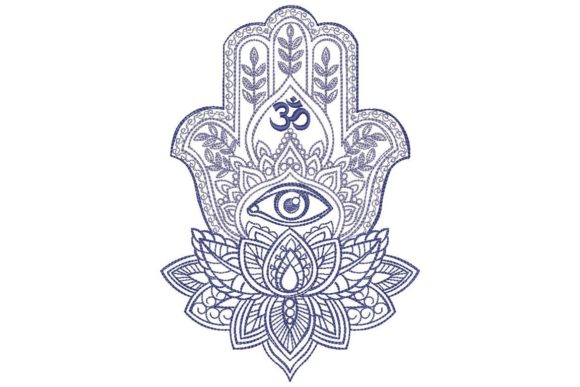
Lotus Hamsa: A Designer’s Review for Brand Merch
As an embroidery designer who has spent years digitizing and reviewing files for commercial use, I approach every new machine embroidery design with a critical eye. It is not enough for a motif to look pretty on a screen; it must perform under the needle, withstand washing, and elevate the brand identity of the business using it. Recently, I evaluated Lotus Hamsa, a design that merges the spiritual symbolism of the Indian Lotus Flower with the protective gesture of the Hamsa hand. For small business owners in the wellness sector, boutique retail, or handmade goods market, this piece offers more than just aesthetic appeal—it provides a narrative tool for customer engagement.
First Impressions: Visual Personality and Brand Fit
The immediate impression of Lotus Hamsa is one of serene elegance. The combination of the lotus, representing purity and rebirth, with the Hamsa, a symbol of protection and good vibes, creates a visual language that is both modern and deeply rooted in tradition. From a design perspective, this feels less like a trendy graphic and more like a timeless emblem. For businesses focusing on Wellness, yoga studios, holistic healing centers, or organic boutiques, this design communicates trust and calm before a single word is read.
The description notes that this is a "splendid Indian Lotus Flower embroidery with Hamsa," suggesting a level of detail that requires careful handling. It does not scream for attention with aggressive boldness; rather, it invites closer inspection. This makes it ideal for brands aiming for a premium, handmade presentation. However, designers must recognize that "splendid" often implies complexity. In the world of commercial embroidery, complexity can be a double-edged sword. While it adds value to the finished product, it demands precision in execution to avoid looking cluttered or messy on smaller items.
Real-World Applications for Small Business Merch
When considering how to integrate Lotus Hamsa into your inventory, versatility is key. This design shines when used as a central element in small business merch strategies. Here is how it performs across different mediums:
- Embroidered Patches: This is perhaps the strongest application. A high-quality embroidered patch featuring this motif can be sold as a standalone accessory or ironed onto denim jackets and canvas bags. The symbolic nature of the Hamsa and Lotus encourages collectors to buy multiple variations if offered in different thread palettes.
- Staff Uniforms and Aprons: For cafes, florists, or spas, placing this design on the chest pocket of an apron embroidery project adds a touch of professionalism. It signals to customers that the staff values mindfulness and care. However, keep the size moderate to ensure it remains legible from a distance.
- Tote Bag Design: Canvas tote bags are a staple for eco-friendly brands. Centering Lotus Hamsa on a tote creates a striking tote bag design that customers are proud to carry. The natural texture of canvas complements the organic lines of the lotus petals.
- Cap Embroidery: Using this on headwear requires caution. The curved surface of a cap can distort detailed designs. If used for cap embroidery, simplify the color palette and ensure the hoop placement is precise to avoid puckering.
Navigating Technical Challenges in Production
While the artistic merit of Lotus Hamsa is clear, the technical execution determines whether the final product looks amateur or professional. As a designer, I advise testing this digital embroidery file rigorously before committing to a large production run. The description mentions it comes with "multiple embroidery fil," which likely refers to file formats or color variations, but it does not specify stitch count or density. This lack of data means you must verify the stitch density yourself.
High stitch density can cause fabric puckering, especially on lighter materials like cotton tees or silk blends common in wellness apparel. Always use an appropriate stabilizer—cut-away for stretchy fabrics and tear-away for stable woven materials. Additionally, consider the fabric texture. Highly textured towels or rough burlap may obscure the finer details of the lotus petals. In such cases, increase the stitch length slightly or choose a simpler version of the design if available.
Another critical factor is scale. If you intend to use this as a small chest logo or on a wristband, check if the details merge together. Tiny lettering or intricate outlines can become a blob of thread if scaled down too far. Test it in black and white first; if the contrast holds up without color, the design has strong structural integrity. If it loses definition, it may need simplification for smaller applications.
Enhancing Brand Identity and Customer Trust
In today’s market, consumers buy into values as much as products. Lotus Hamsa serves as a powerful asset for building brand identity. When customers see this symbol on your custom apparel or packaging, they associate your brand with positive energy, protection, and mindfulness. This emotional connection fosters loyalty and trust.
For Etsy sellers and crafters, using this design in printable mockup presentations can significantly boost engagement. Show the design on a variety of items—pillows, wall hangings, and clothing—to help buyers visualize the end result. Consistency is vital; ensure that the thread colors you choose align with your overall brand palette. A mismatched color scheme can dilute the professional look of your design assets.
Moreover, this design can elevate perceived value. A simple t-shirt becomes a meaningful garment when adorned with a symbol of protection and beauty. This allows small businesses to command higher price points, justified by the quality of the embroidery and the thoughtfulness of the design choice.
Practical Notes for the Embroidery Professional
Before launching Lotus Hamsa in your store, follow these practical steps to ensure success:
- Verify Licensing: Confirm that the license included with the file permits commercial use. Never assume; always read the terms to protect your business legally.
- Check Hoop Size: Ensure the design fits within your standard hoop sizes. If it requires a large hoop, calculate if this increases your production time and cost significantly.
- Thread Color Contrast: Select thread colors that stand out against the fabric. For dark uniforms, use metallic or bright threads to make the Hamsa pop. For light fabrics, subtle tonal variations can create a sophisticated, understated look.
- Create Mockups: Use digital tools to place the design on various products. This helps in marketing and allows clients to approve the placement before stitching begins.
- Test Wash Durability: Embroidery must survive laundering. Wash your test pieces to check for thread bleeding or fabric distortion. This step is crucial for items like aprons and uniforms that undergo frequent cleaning.
In conclusion, Lotus Hamsa is a compelling addition to any embroidery library focused on wellness and lifestyle brands. Its blend of cultural symbolism and aesthetic grace offers a unique opportunity for small businesses to differentiate their merchandise. By paying attention to technical details like stabilizer choice, stitch density, and fabric compatibility, you can transform this digital file into a tangible asset that drives sales and strengthens brand loyalty. Treat it not just as a pattern, but as a strategic component of your visual storytelling.